Partial Thromboplastin Time (PTT/APTT)
Synonyms
Activated Partial Thromboplastin Time, APTT, and PTT.
Applies To
Heparin, thrombin clotting time heparin assay, low molecular weight heparin, heparin inhibitors, and protamine sulfate.
Test Usually Includes
Patient time and control time.
Abstract
The activated partial thromboplastin time (APTT) is a simple, cost-effective screening test. It is often automated, supports batch processing, and has a fast turnaround time. APTT is used to detect intrinsic pathway deficiencies and to monitor heparin anticoagulation.
Patient Care/Preparation
– If using intermittent heparin, draw sample 1 hour before the next dose.
– For continuous infusion therapy, timing is not dose-dependent.
– Avoid drawing from a heparin lock or heparinized catheter.
Specimen
Plasma.
Container
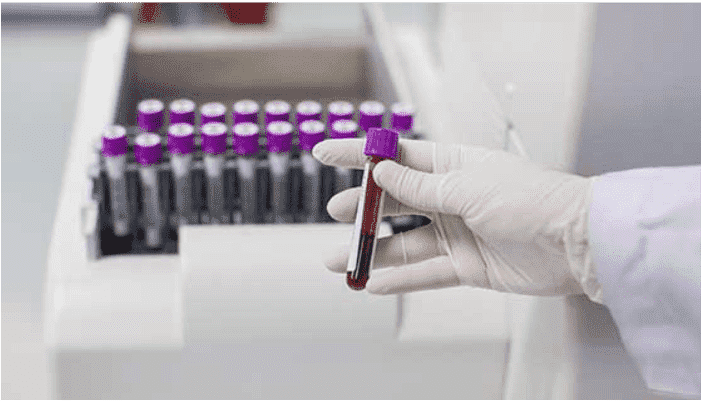
Blue top (sodium citrate) tube.
Collection Instructions
– Collect coagulation studies last if other tests are also ordered.
– Use a two-tube technique to avoid tissue thromboplastin contamination.
– Transport specimen to the hematology lab immediately.
Storage Instructions
Refrigerate sample until testing.
Sample Rejection Criteria
– Underfilled tube
– Hemolyzed or clotted sample
– Delayed transport (>2 hours)
– Incorrect labeling
Reference Range
25–39 seconds
Possible Panic Range: >70 seconds
Use
Screening for:
- Hemophilia A and B
- Congenital factor deficiencies: II, V, VIII, IX, X, XII
- Dysfibrinogenemia
- Disseminated intravascular coagulation (DIC)
- Liver failure
- Vitamin K deficiency
- Inherited prekallikrein and Fitzgerald factor deficiency
Contraindications
Specimen taken within 3 hours of a heparin dose.
Methodology
– Activator (e.g., kaolin, celite) added to plasma.
– Incubate at 37°C for 5 minutes.
– Add thromboplastin and CaCl₂, start timer for clot formation.
Additional Information
– Mild bleeding disorders may show normal APTT.
– APTT prolongs if any clotting factor drops <30%.
– Abnormal APTT also seen in dysfibrinogenemia, liver disease, DIC, lupus anticoagulant, or anticoagulant therapy.
Control of Heparin Therapy
Monitoring heparin is complex and includes:
– Therapeutic goal: maintain APTT 1.5–2× normal.
– Heparin inhibits Xa, IIa, IXa, XIa, XIIa and has a short half-life.
– Heparin should be cautiously used in renal impairment.
Dosage and Administration
– **Intermittent IV/continuous infusion**: 400–500 units/kg/day in divided doses every 6 hours.
– **Low dose**: 10,000–20,000 units/day (prophylaxis)
– **Moderate dose**: 20,000–60,000 units/day
– **High dose**: 60,000–100,000 units/day initially, then taper
Heparin Complications
– Hematoma risk with IM administration.
– Reactions: anaphylaxis, urticaria, osteoporosis, alopecia, thrombocytopenia.
– Watch for platelet aggregation, especially with prolonged therapy.
Monitoring
– Common tests: APTT, ACT, WBCT, thrombin clotting time (TCT).
– Prolonged ACT may suggest excess heparin or other coagulation issues.
– Protamine sulfate can reverse heparin but must be dosed carefully.
– Factor VIII surges can falsely shorten APTT.
– LMWH does not affect APTT and should be monitored via platelet counts.
Low-Molecular-Weight Heparin (LMWH)
– LMWH offers better safety with reduced hemorrhagic risk.
– LMWH does not affect APTT or ACT.
– Routine lab monitoring is not useful; platelet count monitoring is advised.
Appropriateness
– APTT/PT often overused in hospital settings.
– In Noonan’s syndrome, 40% of patients show prolonged APTT.
References
- Andrew M, Paes B, Milner R, et al. *Blood*, 1988;72:1651-7.
- Andrew M, Vegh P, Johnston M, et al. *Blood*, 1992;80(8):1998-2005.
- D’Angelo A, et al. *Am J Clin Pathol*, 1990;94(3):297-306.
- Dhami MS, Bona RD. *Postgrad Med*, 1991;90(1):121-132.
- Hirsh J, Levine MN. *Blood*, 1992;79(1):1-17.
- Hommes DW, et al. *Ann Intern Med*, 1992;116(4):279-84.
- Middleton AL, Oakley E. *ASCP Check Sample*, 1987.
- Turpie AG, et al. *N Engl J Med*, 1989;320(6):352-7.
- Jacobs et al. *Laboratory Test Handbook*, Lexi-Comp Inc, 1994.