Nile Blue Fat Stain Test

Nile Blue Fat Stain Test Overview
The Nile Blue Fat Stain is a cytological test historically used to evaluate fetal maturity by detecting intracellular fat in amniotic fluid. Although largely outdated today, it laid the groundwork for modern fetal maturity assessments.
Applies To
- Fat Cells
- Fetal Maturity Determination
- Lipid Analysis
- Cytology
Test Usually Includes
Special staining and quantification of cells positive for intracellular fat in amniotic fluid samples.
Specimen Requirements
- Specimen Type: Amniotic fluid
- Container: Sealed test tube
- Storage Instructions: Refrigerate if immediate processing is not possible
- Sample Rejection Criteria: Insufficient cellular material or improper fixation
Turnaround Time
Approximately 72 hours
Reference Range Based on Fetal Maturity
- Less than 34 weeks: <1% of cells positive for intracellular fat
- 34–38 weeks: 1–10% of cells positive
- 38–40 weeks: 10–50% or more of cells positive
- More than 40 weeks: >50% of cells positive
Clinical Use
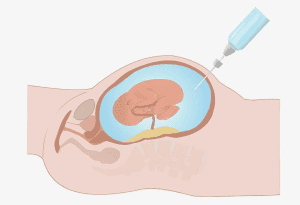
To determine fetal lung maturity by analyzing intracellular fat content in amniotic fluid cells collected via amniocentesis.
Test Limitations
Although historically valuable, this test has been surpassed by more accurate and standardized assessments such as the Lecithin/Sphingomyelin (L/S) ratio and spectrophotometric methods (e.g., optical density at 650 nm).
Methodology
- Amniotic fluid is smeared directly onto a clean glass slide (no fixative needed).
- Stained using 0.1% aqueous Nile Blue sulfate, which contains oxazone for differentiating neutral fats.
- Low-power microscopy (10x) is used to identify:
- Orange, anucleate cells: Positive for intracellular fat (fetal origin)
- Blue, nucleated cells: Lipid-free (non-fetal origin)
- Does not require detailed morphological analysis — based on stain uptake.
Important Notes
This test is mostly of historical interest and is rarely used in modern clinical labs due to the advancement of biochemical tests that provide more precise information about fetal lung maturity.
References
- Kjeldsberg CR, Knight JA. “Amniotic Fluid.” Body Fluids: Laboratory Examination of Amniotic, Cerebrospinal, Seminal, Serous, and Synovial Fluids, 3rd ed., ASCP Press, 1993.
- Jacobs et al. “Laboratory Test Handbook.” Lexi-Comp Inc, 1994.