C-Reactive Protein (CRP) Test: Inflammation Marker, Uses, and Interpretation
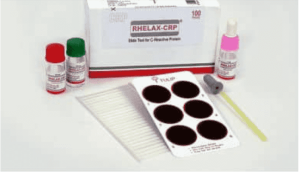
C-reactive protein (CRP)
Synonyms
Acute Phase Reactant, CRP
Abstract
C-reactive protein is a non-specific yet sensitive acute phase marker produced by the liver. It rises rapidly in response to inflammation, infection, or injury, making it a valuable tool to differentiate between viral and bacterial infections.
Specimen
Type: Serum
Container: Red top tube
Reason to Reject Sample
Excessive hemolysis or lipemic serum.
Reference Range
<8 μg/mL
Use
Comparable to ESR, CRP is used to detect and monitor inflammatory conditions like rheumatoid arthritis and infections. It is also useful for monitoring response to therapy and detecting early postoperative wound infections.
Limitations
- Results may be skewed by oral contraceptives.
- Frozen specimens may produce false positives.
Methodology
- Agglutination
- Nephelometry
- Radioimmunoassay (RIA)
Additional Information
CRP is a pentameric globulin found near the gamma zone. It peaks on the third postoperative day and returns to normal by the seventh if no complications arise. It helps in differentiating between rheumatoid arthritis (high CRP) vs lupus (low CRP), and Crohn’s disease (high CRP) vs ulcerative colitis (low CRP). CRP levels in synovial fluid are not diagnostically useful.
References
- Delpuech P et al. Clin Biochem. 1989; 22(4):305-8.
- Downton SR & Colten HR. Semin Hematol. 1988; 25:84-90.
- Schofield KP et al. J Clin Pathol. 1982; 35:866-9.
- Shaw AC. J Clin Pathol. 1991; 44(7):596-9.
- Van Lente F. Hum Pathol. 1982; 13:1061-3.
- Jacobs et al., Lexi-Comp Inc, 1994.