Cold Hemolysin Test (Donath-Landsteiner Test): Diagnosis of Paroxysmal Cold Hemoglobinuria (PCH)
Synonyms
- Donath-Landsteiner Test
- PCH Test
- Test for D-L Antibody
- Test for Paroxysmal Cold Hemoglobinuria
Specimen
Blood
Container
Red top tube (no anticoagulant)
Collection Instructions
- Draw 7 mL of blood into a red top tube pre-warmed to 37°C.
- Draw another 7 mL into a red top tube cooled to 3–4°C (ice bath).
- Collect similar control samples from a healthy individual.
- Send specimens to the hematology lab immediately after collection.
Special Instructions
Contact the laboratory in advance—some facilities require prior scheduling due to test complexity.
Reference Range
Negative
Use
The Cold Hemolysin Test is used for the diagnosis of:
- Paroxysmal Cold Hemoglobinuria (PCH)
- Autoimmune hemolytic anemia with biphasic hemolysins
PCH can occur after viral infections such as:
- Measles
- Mumps
- Influenza
- Infectious mononucleosis
- Chickenpox
- Syphilis (especially with AIDS resurgence)
Methodology
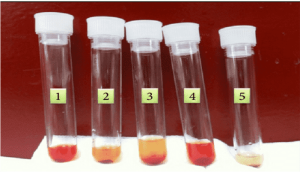
The patient’s serum is observed for biphasic hemolysis—cold binding of antibodies to RBCs followed by hemolysis upon rewarming to 37°C. The test detects the presence of anti-P Donath-Landsteiner antibodies.
Additional Information
- Cold-reactive antibodies are divided into:
- Cold autoagglutinins (IgM)—often anti-I, H, or IH
- Cold hemolysins (IgG biphasic antibodies)—typically anti-P
- Biphasic hemolysins bind RBCs at low temperatures (4°C–20°C), causing hemolysis at 37°C.
- Red cell agglutination is mild, but hemolysis is significant.
- PCH is most common in children post-viral infection but may re-emerge in syphilis cases associated with HIV/AIDS.
References
- Dacie JV, Lewis SM. Practical Haematology, 7th ed. Churchill Livingstone, 1991: 500–502.
- Petz LD, Garratty G. Acquired Immune Hemolytic Anemias. Churchill Livingstone, 1980.
- Sherry C Sr. “Acquired Immune Anemia.” Clinical Hematology. JB Lippincott Co, 1992.
- Williams WJ, et al. Hematology, 4th ed. McGraw-Hill Inc, 1990.
- Jacobs et al. Laboratory Test Handbook. Lexi-Comp Inc, 1994.