
DNA Detection of Mycobacteria: Accurate, Fast Diagnosis Using DNA Probes
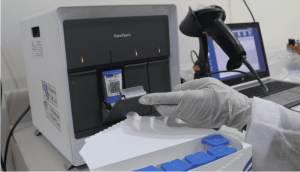
Mycobacteria DNA Test
Synonyms
DNA Hybridization Test for Mycobacteria, Mycobacteria DNA Probe, Mycobacterial Accuprobe®
Test Commonly Includes
Detection of mycobacterial DNA directly from specimens or cultures using DNA probes.
Abstract
Mycobacterium tuberculosis infections are rising, especially in immunocompromised populations. Standard cultures take weeks, delaying treatment. DNA detection methods offer rapid, species-specific identification of mycobacteria from blood, sputum, CSF, and tissue samples, improving patient outcomes and infection control.
Specimen
- Whole blood (yellow top ACD tube)
- Sputum, pleural fluid, CSF, bronchial aspirates, biopsy tissue
Container
- Use sterile, sealed plastic containers (e.g., sputum cup)
- Place primary container in an additional sealed container for safety
Collection
Collect as for mycobacterial culture. Morning sputum is preferred. Use mid-void urine. Avoid contamination.
Storage Instructions
- Store at 4°C if not processed immediately
- Do not freeze—freezing degrades DNA
Reason to Reject Sample
- Contaminated exterior of container
- Stored at room temperature >12 hours
- Frozen specimens
Turnaround Time
4–7 days after receipt.
Use
Rapid detection and species-level identification of Mycobacterium tuberculosis and atypical mycobacteria in clinical samples.
Limitations
- Sample overgrowth by other bacteria may obscure results
- Frozen samples are not suitable
Methodology
Specimen DNA is extracted and denatured by heating, then hybridized with a labeled Mycobacterium-specific probe. Excess probe is washed off. Bound DNA is detected via chemiluminescence or autoradiography. Chemiluminescence is preferred for its safety and clarity.
Additional Information
Mycobacteria are slow-growing aerobic bacilli. Infections are usually diagnosed using acid-fast staining and culture, both of which are time-consuming. DNA detection allows early and precise identification, aiding in prompt treatment. Mycobacterium avium complex and M. tuberculosis are common species detected in clinical labs.
References
- Jacobs, Demott, Finley, Horvat, Kasten.JR, & Tilzer. “Laboratory Test Handbook”, Lexi-Comp Inc, 1994
- CDC, “A Strategic Plan for the Elimination of Tuberculosis in the U.S.,” MMWR, 1989
- Eisenach KD et al., “Repetitive DNA Sequences as Probes for M. tuberculosis,” J Clin Microbiol, 1988
- Hance AJ et al., “Detection and Identification by DNA Amplification,” Mol Microbiol, 1989
- Brisson-Noel A et al., “DNA Amplification in Clinical Evaluation,” Lancet, 1991


