Infectious Mononucleosis Screening Test (Monospot Test): Uses, Methods & Limitations
Mononucleosis Screening Test
Synonyms
IM Serology, Monospot™ Test, Monosticon® Dri-Dot® Test, Mono Test, Paul-Bunnell Test
Test Commonly Includes
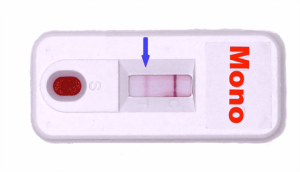
Detection of heterophil antibodies in serum to support diagnosis of infectious mononucleosis.
Specimen
Type: Serum
Container: Red top tube
Reference Range
Negative
Use
To identify infectious mononucleosis in symptomatic patients by detecting heterophil antibodies.
Limitations
- 10% of adults and more children with IM may not produce heterophil antibodies.
- False positives may occur in diseases like lymphoma, leukemia, hepatitis, and others.
- EBV antibody testing is advised when Monospot is negative but clinical suspicion remains.
- Monospot has 86% sensitivity and 99% specificity.
Methodology
Agglutination and immune adherence techniques are used to detect heterophil antibodies.
Additional Information
Heterophil antibodies usually appear between days 6–10 of illness and peak in the 2nd to 3rd week. Titers can persist for 1–8 weeks. Persistent false-positive results are rare but possible. Consider repeating the test or evaluating EBV, CMV, or HHV-6 antibodies if the test is negative but symptoms are present. Always review the peripheral blood smear.
References
- Evans AS & Niederman JC. Am J Clin Pathol, 1982.
- Fleisher GR, Collins M. J Clin Microbiol, 1983.
- Horwitz CA, Henle W. Am J Clin Pathol, 1979.
- Lee CL, Davidsohn I. Am J Clin Pathol, 1968.
- Vahine A et al. JAMA, 1979.
- Jacobs et al., Laboratory Test Handbook, Lexi-Comp Inc, 1994.